Commercial workplaces require regular cleaning to maintain presentation and support day-to-day operations.
However, routine cleaning and deep cleaning serve different purposes.
While regular cleaning focuses on maintaining frequently used areas, deep cleaning involves more detailed attention to surfaces, fixtures and locations that may not be addressed during every scheduled visit.
Understanding the difference can help businesses plan suitable cleaning programmes and determine when additional work may be appropriate.
What Is Regular Commercial Cleaning?
Regular commercial cleaning involves tasks completed according to an agreed schedule.
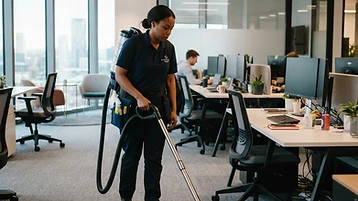
For an office, this may include vacuuming, mopping, dusting accessible surfaces, emptying bins and cleaning washrooms and shared kitchens.
In retail environments, regular cleaning may place greater emphasis on customer-facing floors, entrances and frequently used facilities.
The specific tasks depend on the premises and the cleaning agreement.
Routine cleaning helps manage everyday dirt and maintain an appropriate level of cleanliness between visits.
What Is Commercial Deep Cleaning?
Deep cleaning generally involves more intensive or detailed work than the routine cleaning specification.
It may include attention to areas that are difficult to access, surfaces requiring additional treatment or tasks that are not necessary during every regular visit.
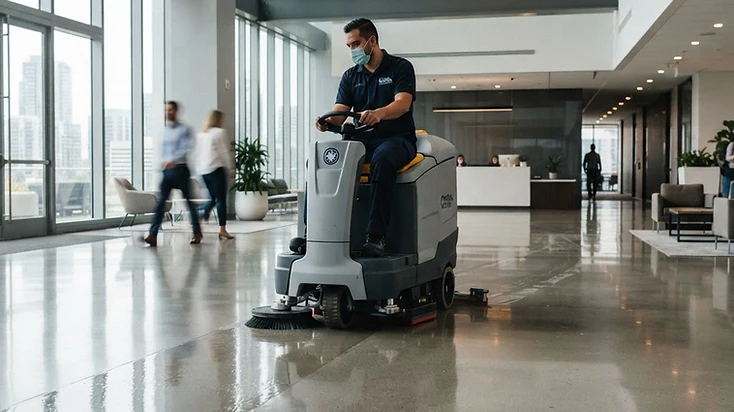
Examples can include detailed cleaning around fixtures, attention to accumulated dust, intensive floor cleaning and more thorough cleaning of selected amenities.
The exact scope should be agreed in advance because the term "deep cleaning" can mean different things to different providers.
A clearly defined specification is therefore important.
Why Regular Cleaning May Not Cover Everything
Routine cleaning programmes are designed around the time and tasks agreed for each visit.
A cleaner may be responsible for maintaining floors, bins, washrooms and accessible surfaces within a defined schedule.
However, certain areas may require more time, specialist methods or temporary access arrangements.
For example, moving furniture to clean difficult-to-reach floor areas may not be part of every routine visit.
Likewise, intensive carpet cleaning or particular hard floor treatments may require separate equipment and scheduling.
These tasks can be planned as periodic services rather than added to every routine cleaning session.
When Might Deep Cleaning Be Appropriate?
The need for deep cleaning depends on the workplace's condition, usage and operational requirements.
Businesses may consider additional detailed cleaning following periods of heavy occupancy, before important events, after certain building works or as part of a planned maintenance programme.
Some workplaces may also identify particular areas requiring additional attention during routine reviews.
Deep cleaning should not be treated as a substitute for an appropriate regular cleaning schedule.
Instead, it can complement routine services by addressing requirements that fall outside everyday tasks.
Planning Around Business Operations
Deep cleaning may require additional time, access or temporary restrictions on particular areas.
For example, detailed floor work may need to be scheduled when employees and visitors are not using the space.
Some tasks may also involve drying time or specific safety considerations.
Businesses should discuss these practical requirements before arranging the work.
Planning can help minimise disruption and ensure the agreed tasks are appropriate for the surfaces involved.
Choosing the Right Cleaning Methods
Different surfaces require different approaches.
Carpets, vinyl, tiles, polished concrete and other commercial materials may have specific maintenance requirements.
Using unsuitable products or techniques can damage surfaces or affect their appearance.
Cleaning methods should therefore be selected according to the material, condition and relevant manufacturer guidance.
Where specialist equipment or techniques are required, these should be considered during service planning.
Incorporating Deep Cleaning Into a Maintenance Programme
Rather than waiting until visible problems become significant, businesses can consider whether periodic detailed cleaning should form part of their wider maintenance planning.
The frequency may vary according to occupancy, floor types, traffic and operational requirements.
A busy retail environment may have different priorities from a small professional office.
Businesses should also distinguish between tasks that can be completed through routine cleaning and those requiring additional resources.
Clear planning helps establish realistic expectations and makes it easier to budget for periodic work.
Maintaining a Professional Workplace
Regular cleaning and deep cleaning are complementary services.
Routine cleaning focuses on ongoing presentation and everyday requirements, while deep cleaning provides more detailed attention when needed.
The most suitable arrangement depends on the premises, its condition and the level of usage.
Understanding these differences can help businesses develop a cleaning programme that addresses both immediate and longer-term requirements.
To discuss routine commercial cleaning or specialist cleaning requirements, contact NZ Facility Care through our Request a Quote page.
Request a Quote